
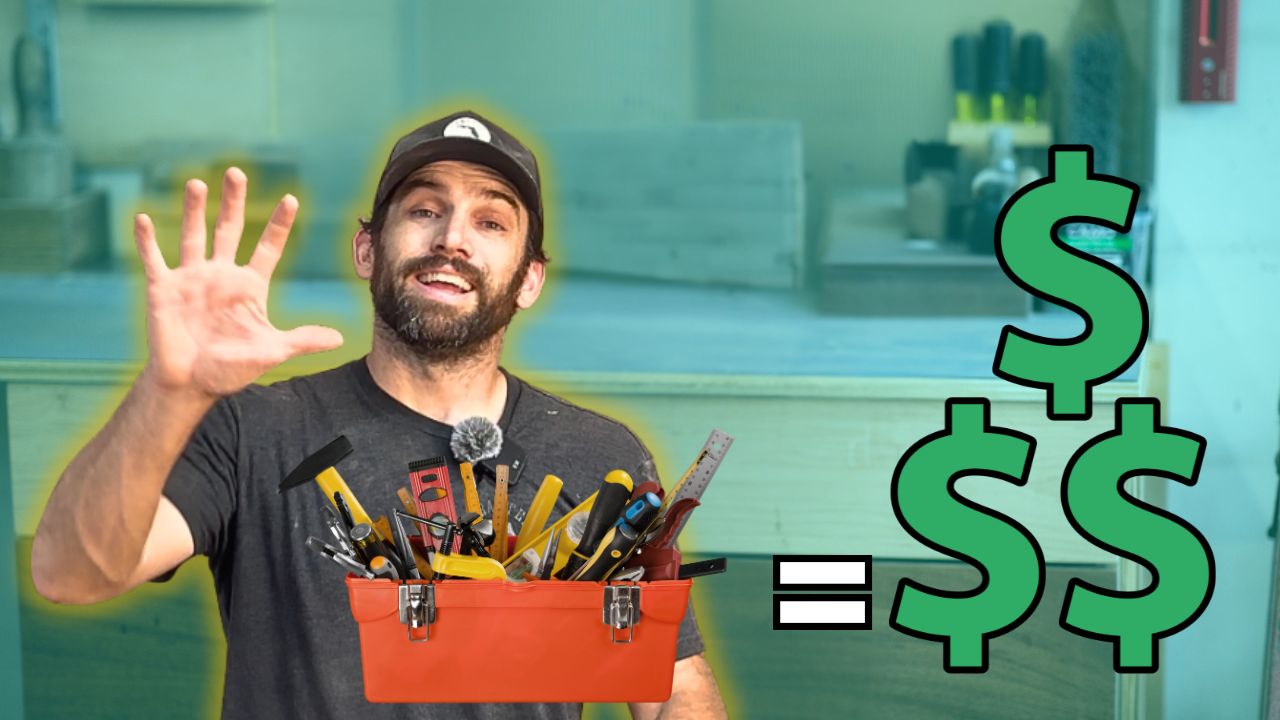
If you’ve spent any time around a woodshop, you already know there’s no shortage of tools promising to make your life easier. But after years of building everything from fireplace surrounds to custom built-ins, I’ve learned there are a few tools that consistently earn their keep — the ones that save time, improve accuracy, and elevate the final product.
Here are the five most valuable tools in my woodshop, and why I think every serious woodworker — whether you’re building in a garage or running a full custom shop — should have them.
1. The Track Saw — Precision Anywhere
If I had to start over tomorrow, the first tool I’d buy again would be a track saw.
Why? Because it turns a sheet of plywood into precision-cut parts without wrestling it across a table saw.
When you’re working solo — or in a tight workspace — the track saw is your best friend. It’s mobile, accurate, and when paired with a quality track and dust collection, it delivers clean, glue-ready edges every time. For cabinet work, built-ins, and custom paneling, this thing pays for itself in weeks.
I use the Kreg Track Saw — it’s smooth, powerful, and perfectly suited for precision work in a small shop.
Pro Tip: Use a dedicated cutting table or foam insulation board under your plywood to keep cuts clean and consistent.
2. The Pocket Hole Machine — Speed Meets Strength
Say what you want about pocket holes, but in the right applications they’re unbeatable.
A pocket hole machine (not the handheld jig — the real deal) changes the game for production work. It lets you assemble cabinet boxes, face frames, and built-ins fast, without sacrificing strength or alignment.
In my shop, it’s the difference between one-off craftsmanship and efficient, repeatable production. The joints are strong, clean, and if you know how to design around them, they disappear completely.
My go-to is the Kreg Foreman Pocket Hole Machine — it’s fast, precise, and built to last.
Pro Tip: Upgrade your screws — the cheap ones strip fast. Stick to branded pocket hole screws designed for hardwood or plywood.
3. The Paint Sprayer — Professional Finishes at Home
If you’ve ever spent an afternoon brushing or rolling cabinet doors, you already understand the value of a paint sprayer.
A good HVLP or airless sprayer turns finishing from a chore into a craft. You get smoother coverage, faster application, and a finish that looks like it came straight out of a professional booth.
I use the Wagner Paint Sprayer for built-ins, mantles, and furniture — it’s reliable, easy to clean, and perfect for water-based finishes.
Pro Tip: Keep your sprayer clean. A few extra minutes of cleanup saves hours of frustration later.
4. The Router Table — The Secret Weapon of Custom Work
The router table is easily one of the most versatile tools in the shop.
Edge profiles, joinery, grooves, rabbets, custom moldings — this thing does it all. For me, it’s not just about fancy edges; it’s about control. A well-set-up router table gives you precision you can’t get with a handheld router, especially on small parts or repeat cuts.
When I’m building custom cabinetry or trimming a built-in, the router table handles all the detail work that makes a piece look refined instead of rushed.
I recommend this Router Table setup — it’s sturdy, adjustable, and built for accuracy.
Pro Tip: Invest in a good fence and lift system. Being able to dial in height adjustments within thousandths of an inch makes a world of difference.
5. The Drum Sander — The Finishing Touch
Last but not least, the drum sander.
This one’s not cheap, but once you have it, you’ll wonder how you lived without it.
It flattens panels, levels glue-ups, and gives you a uniform surface ready for finish sanding. Whether I’m working with solid wood tops, built-in shelves, or veneered panels, the drum sander guarantees consistency and saves hours of hand sanding.
The JET Drum Sander has been a workhorse in my shop — smooth, reliable, and built to handle daily use.
Pro Tip: Take light passes and keep your feed rate steady. Let the machine do the work.
Final Thoughts
You don’t need every tool on the market — but you do need the right tools.
Each of these five pieces has earned its place in my shop by doing one thing really well: making the work faster, cleaner, and more enjoyable.
If you’re serious about leveling up your woodworking, start here. You’ll spend less time fighting your tools and more time building the kind of projects you’re proud to sign your name to.
Affiliate Disclaimer
Some of the links in this post are affiliate links, which means I may earn a small commission if you make a purchase through them — at no extra cost to you. I only recommend tools I personally use and trust in my own shop.
Discover more from CRAFTED IN FLORIDA
Subscribe to get the latest posts sent to your email.
 CRAFTED IN FLORIDA