
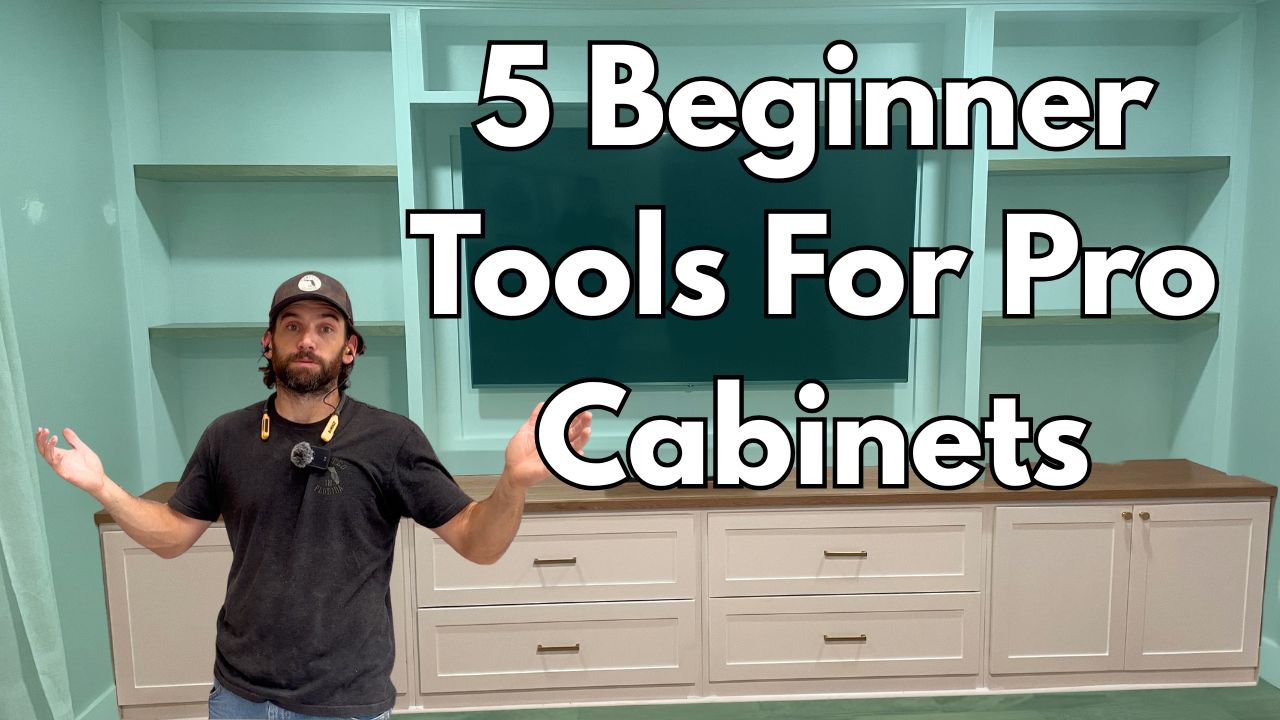
I’ve been building cabinets professionally for over 10 years, and if I had to start over today, these are the first tools I’d invest in to build the best possible cabinets—without breaking the bank.
Like a lot of woodworkers, I started in my garage building entertainment centers and custom cabinetry. Along the way, I learned that the right tools can make your work faster, more accurate, and a whole lot less frustrating.
Now, I’m not talking about the basics—you should already have a good table saw, drill, and the usual woodworking gear. This list is specifically for cabinet making. Let’s dive in.
1. Dado Stack
A dado stack is exactly what it sounds like—a stack of saw blades that cut a wider groove than your standard blade.
When you’re building cabinets, this is essential for cutting dados to house your back panels or to create stronger joints for your top and bottom panels. For example, on my ¾” cabinet sides, I’ll set the dado depth to about ⅜” and slide the back panel in for a cleaner, more professional look.
You can find dado stacks in a range of prices, from budget-friendly sets on Amazon to higher-end brands like DeWalt. Whichever you choose, this tool will instantly improve the quality and strength of your cabinets.
2. Pocket Hole Jig
Pocket hole jigs aren’t just for general woodworking—they’re incredibly useful in cabinet construction.
One of my favorite uses is attaching the nailers at the top and back of the cabinet. With a little glue and pocket screws, you can assemble these parts quickly and securely without visible fasteners on the outside.
There are a few styles—from small clamp-on jigs to larger, bench-mounted machines. If you’re doing high volume, the bigger units are a game changer, but for most DIY builds, a mid-sized jig works perfectly.
3. Hinge Jig
If you’re building cabinet doors, you’ll almost certainly be using concealed European-style hinges. Installing these without a jig is a recipe for frustration.
A hinge jig takes the guesswork out of drilling the 35mm hole for the hinge cup. Most come with a Forstner bit, a depth stop so you don’t drill too deep, and guides for the pilot holes.
I recommend pairing a jig with high-quality hinges like Blum for a smooth, professional finish.
4. Shelf Pin Jig
Adjustable shelves are standard in most cabinets, but drilling all those holes evenly can be tedious without a jig.
A shelf pin jig lets you drill perfect, evenly spaced holes quickly. Most include a pin for indexing your next row and a bit sized for 5mm shelf pins (which I recommend over ¼”). With this setup, you can knock out an entire cabinet’s worth of holes in minutes.
5. Edge Banding Kit
If you’re building frameless cabinets, you’ll need to finish the exposed edges of your plywood. That’s where edge banding comes in.
Pre-glued edge banding is my go-to for DIY work. Simply cut a strip, apply heat with an iron (yes, the same kind you use on clothes), and press it in place. Once it’s cool, trim it flush with a set of edge trimmers and clean up the ends with flush cutters.
For painted cabinets, you can use white or paintable banding; for wood grain, match the species for a seamless look.
Final Thoughts
These five tools aren’t the only ones you’ll need for cabinet making, but they are the ones that will dramatically speed up your workflow and improve your results. Whether you’re a weekend DIYer or just starting your cabinet-making journey, having the right gear will make all the difference.
Want more woodworking tips, build guides, and tool recommendations?
Subscribe to the Crafted In Florida newsletter so you never miss a project, and join other builders learning how to create beautiful, professional-quality pieces at home.
Discover more from CRAFTED IN FLORIDA
Subscribe to get the latest posts sent to your email.
 CRAFTED IN FLORIDA